
Understanding New England’s Seasonal Temperature Extremes
Living in Northern Massachusetts and Southern New Hampshire means experiencing some of the most dramatic temperature swings in the country. From bone-chilling winters that plunge well below zero to sweltering summer days that push into the 90s with oppressive humidity, your heating and cooling systems face constant challenges throughout the year. At Wilson Brothers Heating & Air Conditioning, we’ve observed how these extreme weather patterns create unique stresses on HVAC equipment that homeowners in milder climates never encounter. The rapid temperature fluctuations, sometimes varying by 40 degrees within a single day during transitional seasons, force your systems to work harder and cycle more frequently than manufacturers originally anticipated during design phases.
Our region experiences an average of 120 heating degree days where temperatures drop below 65°F, requiring consistent furnace operation, while summers bring approximately 60 cooling degree days above 75°F. These statistics translate into real mechanical stress on components like heat exchangers, compressor units, and blower motors. The constant expansion and contraction of metal components during these temperature swings accelerates wear patterns that we regularly address during heating service calls throughout Pepperell, Groton, Townsend, Dunstable, and Fitchburg.
Winter’s Harsh Impact on Heating Systems
The brutal New England winter places extraordinary demands on your furnace, particularly during polar vortex events when arctic air masses drive temperatures down to minus 20°F or lower. During these extreme cold snaps, your heating system runs almost continuously, pushing its operational limits while struggling to maintain comfortable indoor temperatures. We’ve been the area’s first choice for the installation and repair of heating and cooling systems for residential homes in Northern Massachusetts and Southern New Hampshire, and through decades of experience, we understand how ice dams, frozen condensate lines, and snow accumulation around outdoor venting systems create additional complications that require specialized knowledge to address effectively.
Heavy snowfall, averaging 60 inches annually in our service area, often blocks furnace exhaust vents and fresh air intakes, causing safety switches to trigger system shutdowns. The weight of accumulated snow and ice on rooftop units can damage mounting brackets and compromise structural integrity. Additionally, the freeze-thaw cycles common during late winter and early spring cause moisture infiltration that corrodes electrical connections and rusts critical components prematurely.
Summer Humidity and Cooling System Strain
While winter presents obvious challenges, New England summers bring their own set of demanding conditions for air conditioning systems. The combination of high temperatures and elevated humidity levels, often reaching 80% or higher, forces cooling equipment to work overtime removing moisture from indoor air while simultaneously lowering temperatures. This dual function significantly increases energy consumption and mechanical wear compared to systems operating in drier climates.
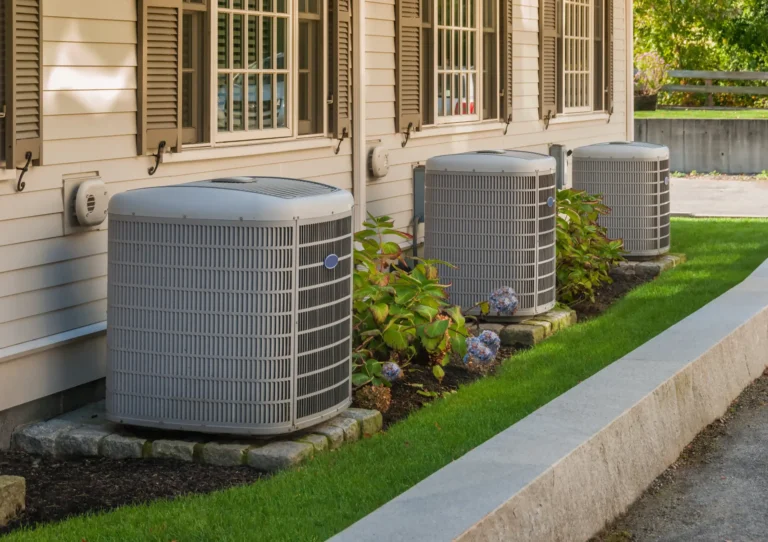
The coastal influence from the Atlantic Ocean creates additional complexity, as salt-laden air accelerates corrosion on outdoor condenser units, particularly affecting aluminum fins and copper coils. We regularly encounter systems where salt exposure has reduced heat transfer efficiency by up to 30%, dramatically impacting cooling performance and energy costs. Together as a team, we are committed to delivering exceptional customer service along with our highest-rated, energy-efficient heating and cooling equipment all backed by our exclusive warranties and service plans for Comfort+Plus Members.
Transitional Season Challenges
Spring and fall in New England present unique operational challenges as daily temperature swings often require both heating and cooling within the same 24-hour period. These transitional seasons stress system components differently than steady-state operation, causing:
- Frequent cycling: Systems turning on and off repeatedly throughout the day increases wear on ignitors, contactors, and start capacitors
- Condensation management: Rapid temperature changes create excess moisture that can lead to mold growth in ductwork and rust formation on heat exchangers
- Thermostat confusion: Older thermostats struggle to maintain comfort when outdoor temperatures fluctuate dramatically
- Filter clogging: Spring pollen and fall leaf debris accelerate filter loading, restricting airflow and reducing efficiency
Protecting Your Investment Through Weather-Appropriate Maintenance
Understanding how New England’s extreme weather patterns affect HVAC systems enables us to implement targeted maintenance strategies that extend equipment life and maintain peak efficiency. Our comprehensive approach includes inspecting and cleaning condensate drains before humid summer months, checking heat exchanger integrity before winter heating season, and adjusting refrigerant charges to compensate for temperature-related pressure variations. We also focus on weatherproofing outdoor units, sealing ductwork penetrations, and ensuring proper insulation around refrigerant lines to minimize weather-related degradation. By anticipating seasonal challenges and addressing them proactively, we help maximize your system’s reliability while minimizing unexpected repair costs throughout the year’s demanding weather cycles.
